
Abbreviated verb forms, as ’m, ’re or ’s, are really much in use in American English. It is important to learn telling them. For irregular verbs, feel welcome to ■APPENDIX 2 and ■APPENDIX 3. We first try the exercises in our thoughts, as in the ■MIND PRACTICE.
Exercise 29. We can tell abbreviated “is” from “has” only by their contexts, as both get shortened to ’s. We continue practicing as in ■EXERCISE 28.
’m: am
’re: are
’s: is or has
’ve: have
’d: had or would
Example: They’ve clung.
Answer: cling, clang, clung.

1. We’re swimming.
2. It’s shone.
3. You’d gainsaid.
4. She’s eaten.
5. They’d woken.
6. He’s heard.
7. They’re working.
8. She’d spun.
9. It’s crowing.
10. You’ve spoken.
Exercise 30. Let us think about the three verb forms, along with the mapping variable and the target grammatical time.
Example: She’s read.
Answer: TO, the PRESENT; read, read, read
1. We’re drawing.
2. She’s sung.
3. You’d written.
4. You’ve colored.
5. They’ve painted.
6. She’s swinging.
7. It’s ringing.
8. She’s left.
9. I’m dreaming.
10. We’ve played.
Feel welcome to the second part of the language journey:
■PART TWO, CONTENT.
■This text is also available in Polish.

Part 1. Towards the grammatical Aspect
We draw conclusions from natural language acquisition and begin with verbs, to be, to have, to do, and the verb form will. Part 1 works verb syntax for the Simple, Progressive, and Perfect, along with the Affirmative, Negative, Interrogative, and Negative Interrogative. ■More


Part 2. Towards the time frame
“Future in the Past” or “Unreal Past”? The Simple against the Perfect, and the Simple versus the Progressive, we make out a time frame. Devices as the Modal Net and Form Relativity may render the Conditional or Sequence of tenses redundant, for “unreal” grammar to work in real time. ■More
ADVERTISEMENT
Book format in preparation.
In the first part of the language journey, feel welcome to consider a picture for
■ the grammatical Past, Present, and Future;
■ the Simple, Progressive, and Perfect;
■ infinitive, auxiliary, and head verb forms;
■ the Affirmative, Interrogative, Negative, and Negative Interrogative;
■ irregular verbs and vowel patterns: high and low, back and front.
Third edition, 2025.


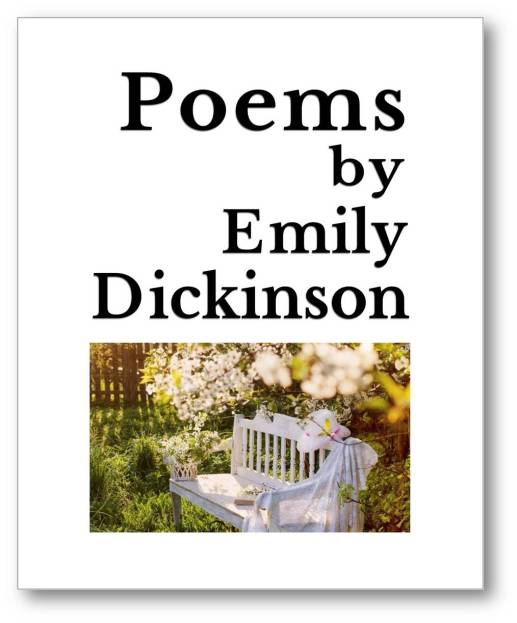
The world may never have seen her original handwriting, if her skill was taken for supernatural. Feel welcome to Poems by Emily Dickinson prepared for print by Teresa Pelka: thematic stanzas, notes on the Greek and Latin inspiration, the correlative with Webster 1828, and the Aristotelian motif, Things perpetual — these are not in time, but in eternity.
■Free access, Internet Archive
■E-pub | NOOK Book | Kindle
■Hard cover, Barnes & Noble | Lulu

Psycholinguistics
Linguistics
& Translation
Knowledge gains with good translation
■Public Domain
Translation. com
American English & Polish

Internet Archive,
the free text and image repository
■Feel welcome to use my free materials■
The posters are available to shop online as well.

 GRAMMAR WEBLOG BY TERESA EVA PELKA