
In childhood, we people mostly first learn telling where things or persons are, and the ability to tell the hour comes after. Place and time remain a natural association throughout lifespan: for a thing to take place, there has to be time.
To learn to walk, we do not require anybody to describe how to move own body, give rules or definitions for this. Grammar is a standard ability as well, and there are a few words quite often in use for spatio-temporal whereabouts in English, as on, in, and to.
Humans have evolved grammars on the surface of planet Earth, and this is where we can begin. To get around in everyday life, we cognitively map on our environments. Asked for directions, whether in a village or in a town, we may talk as if we could know from above ground, and this mostly works.
Humans naturally build mind perspectives for neighborhoods or vicinity, in familiar settings. Since the very beginning, people have lived in places that allow the horizontal plane: to sit, have meals, sleep; read, write, or paint.

Let us think about a picture we could associate with this inhabited world. Everyone is welcome to come up with ideas and pictures.

Human grammatical ability is not limited to spatial whereabouts.
We could travel the world and keep our grammar unchanged. To think about the horizontal plane generally, we may think about a surface or place.

We could have a few such extents actually working, as natural foliage on a hike, a fancy fleece blanket, workout or yoga mat, especially if we add a huge umbrella and a good size basket of fruit. ■GRAMMAR VISUALS have ideas for a grammar picnic: some people would say that quotient or intelligence is in solving problems; we believe it is intelligent not to have difficulty with grammar.
Let us imagine we are on a surface or ground. The Simple Aspect can help regard what generally existed, exists, or we think that will exist {ON} a cognitive extent.
THE PAST
We skateboarded a lot.
THE PRESENT
We work.
THE FUTURE
We will ski all winter.

The Progressive Aspect helps tell that something was, is, or we predict that will be IN progress, or IN its course. Our picture for this Aspect may be activity or faculty as IN an area.
THE PAST
We were hiking.
THE PRESENT
I am writing a grammar book.
THE FUTURE
They will be working.

We can use the Perfect Aspect to say what had taken place, has taken place, or we reason that will have taken place TO a moment in time. The moment does not have to mark the end of the state, activity, or faculty. We may compare this to a way TO a place.
THE PAST
I had studied.
THE PRESENT
He has traveled a lot.
THE FUTURE
We will have finished by then.

The Aspects can be cognitive variables, but they are never options. They work together, as the Simple to tell what got ON a cognitive extent, when we were IN progress with something else.
We were picking strawberries when the rain came.
Schools of grammar may vary on words as on, in, to, or at, and these can be adverbs, sometimes. Adverbs may go into categories as manner or place, dependent on the grammar approach only.
Let us mind that word forms are language forms. In French, we could say sur, in German auf, and in Russian на (Latin alphabet na), in contexts where we say on, in English. The ■EXTRAS tell more about language form.
We can resolve to use ON, IN, and TO as prepositions.
They can work the same whatever the place and hour, and we become independent of grammar definitions or rules by other people.
Language skill naturally needs thinking in real time, without looking up a book. A bit of human logic, as here, can make this thinking easier.

There is no way to predict all possible head verbs. This is why we include the infinity symbol with all Aspect patterns.
ADVERTISEMENT
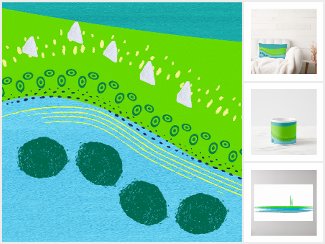
Spring Flowing Colors


Altogether, there are four Aspects in English, and we can have four prepositions to works as Aspect mapping values, ON, IN, TO, and AT. Part 2 of the grammar journey tells about the variable AT.
For language, the name cognitive variable does not mean that something often changes. The Aspects have not changed in hundreds of years. Variables are ideas we use flexibly; we can do so, because objectively there are no rules able to design on Aspect use.
There cannot be a rule to decide if we want to say that we live somewhere, or we have lived, have been living, or we are living somewhere. Human cognitive variables are up to own choosing.
Whether the English is American, British or another, we humans live ON Earth, happen to be IN geographical areas, and may learn and remember ways TO places. Relating this reality and language cannot break reasonable rules.
Importantly, we are not building a system. Systems need to be finite, and language is not a finite entity: it is impossible to calculate all phrases people can create, and all words can have more than one sense, so we interpret them in context.
We are not building a program, either. It is reasonable to doubt if computers are really capable of cognitive variables: machines operate on codes that ascribe values. For natural language, we could be only arbitrary to note letters or words as values of math: could it be that letter A is of value 1 and letter C of value 3, objectively?
Our core verbs (BE, HAVE, DO, WILL), time extents (PRESENT, PAST, FUTURE), and Aspects (SIMPLE, PROGRESSIVE, PERFECT), are a human logical set or array, where we grant the Aspects the shape of cognitive variables, ON, IN, TO, and AT.
Let us now compare our logic and classic grammar guidance. It may advise to use use the Progressive for things “happening now”, or “at a given moment”, and the Simple for matters that are more regular. We might get to associate the Progressive with words as “now” or “then”, and the Simple with words as “always” or “never”.
It is yet standard to say or write,
I am happy now;
I think I like it now;
The grammatical tense is the Present Simple.
Classic guidance may indicate there are “stative” verbs, and we can use them with the adverb “now”, but we do not use them with the Progressive; yet it would be also standard to say or write,
John is being mad now; he is pranking.
Jake is mad angry now; his investment has not worked.
Let us think about our array. For thinking and feeling, whether the emotion or idea is good or bad, we people would rather grant entire cognitive extents, that is, use the variable {ON}: we naturally give room to hearts and minds.
Landscapes are good for grammar visuals, but we may compare abstract or symbolic surfaces, to have an overall reference: particular imaging might not always look adequate.

I am happy now;
I think I like it now;
Jake is mad angry now.

Human language is of human mind. When we think the matter or behavior is not the usual, not of ways or character we associate entire extents, the language standard gives us to delineate, mark a part of a cognitive extent, and the Aspect is the Progressive.

John
is being mad now.


We can learn to grant extents: to say, I am hating you — we know the variable {IN} tells we do not mean we always hate, or that we really hate at all: we do not use the variable {ON}.
Cognitive extents can help with everyday American English a lot. Freedom of speech is cherished in the United States, and people are free to choose on own language styles. This means that grammar books are not to prescribe on the language, and this book does not have any such purpose: the title of this chapter says time rambles different, though classic grammars would advise differently.
Feel welcome to some more picture on ■4.1. The idea of travel in grammar.
■This text is also available in Polish.
ADVERTISEMENT
Book format in preparation.
In the first part of the language journey, feel welcome to consider a picture for
■ the grammatical Past, Present, and Future;
■ the Simple, Progressive, and Perfect;
■ infinitive, auxiliary, and head verb forms;
■ the Affirmative, Interrogative, Negative, and Negative Interrogative;
■ irregular verbs and vowel patterns: high and low, back and front.
Third edition, 2025.


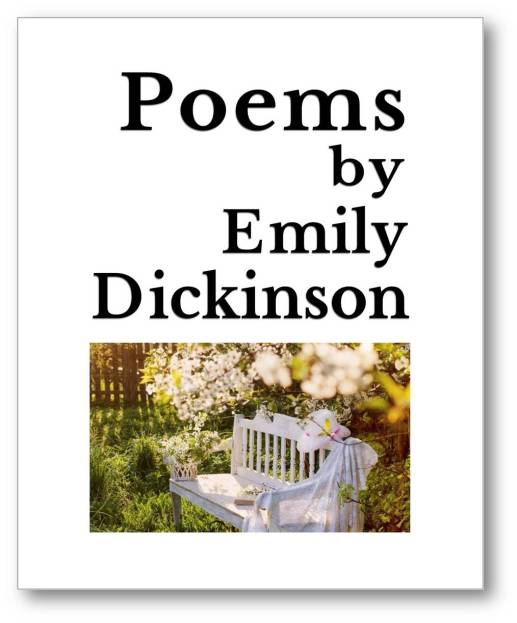
The world may never have seen her original handwriting, if her skill was taken for supernatural. Feel welcome to Poems by Emily Dickinson prepared for print by Teresa Pelka: thematic stanzas, notes on the Greek and Latin inspiration, the correlative with Webster 1828, and the Aristotelian motif, Things perpetual — these are not in time, but in eternity.
■Free access, Internet Archive
■E-pub | NOOK Book | Kindle
■Hard cover, Barnes & Noble | Lulu

Psycholinguistics
Linguistics
& Translation
Knowledge gains with good translation
■Public Domain
Translation. com
American English & Polish

Internet Archive,
the free text and image repository
■Feel welcome to use my free materials■
The posters are available to shop online as well.
 GRAMMAR WEBLOG BY TERESA EVA PELKA