
In a standard, face-to-face conversation, it is naturally easy to tell if we speak with one or more persons. However, the pronoun you has evolved into the same shape for the singular and the plural. The shape is also the same for a verb object, to compare phrases as,
I told her, — She told me.
You told me — I told you.

Let us think about a possible psychological reality, to explain the matter to ourselves at least: our understanding does not have to be universal, that is, we do not need everybody believing the same, to have an idea. Human comprehension generally is not universal.
If we look to our core be and have, we may interpret the personal pronoun “you” as more or less — “not me”. To think about human history and civilization, such evolution is likely, quite pragmatic, and good quality thinking.
The development needs not mean contestation. We people simply each are own self throughout lifespan. We couldn’t swap bodies, for example. Imagine Aristotle as he chats with Plato after parachuting.


Be and have differ the most for the singular first and third persons; let us compare I or me against he, she, or it.

ADVERTISEMENT
Spring Flowing Colors


The pronoun we may also be used for a personally neutral figure of speech, to avoid speculation on differences between you and me.
Authors conform to this manner quite often. It might feel cumbersome to tell or read, You need to think about this, or You need the exercise.
(How could I even know you?)

We could describe the third person singular — he, she, and it — as the singular “not you and not me”. It differs the most from the first, the pronoun I, and this also has had uses in literature.
In everyday life, people would say he or she about us, if not in touch. Ourselves, we always say me or I, as everyone is own best permanent company.
The third person plural they would be the plural “not you and not me”. It is less marked for difference, as we never literally think about ourselves in the plural. We may only use figures of speech.
The pronoun “they” may work together with the so-called generic “you”, to tell about anyone, everyone or persons generally.
If you eat a cookie, you do not have it for later.
If someone eats a cookie, they do not have it for later.
Here, the pronoun they stands for the phrase “he or she”:
If someone eats a cookie, he or she does not have it for later.
Everyday Englishes also have forms as youse, yous, or you’s. Dependent on individual speakers, these forms could be putting the pronoun “you” in the plural, as is regular with nouns, or combining the verb singular feature ―s, to address one person.
Please mind, such talk is informal, because it “trades” between types of words, pronouns and nouns or verbs.
Such “trade” has already happened in the history of English. The Progressive can be derived from the Middle Ages gerund, as in,
He was on reading;
(the word “reading” is nominal here;
it is a gerund, and it answers the question Who or What?).
He was reading;
(the word “reading” is here verbal;
it is a participle to answer the question Doing what?).
Feel welcome to a big chart for three Persons and paths,
■3.3. THE SIMPLE, PROGRESSIVE, AND PERFECT TOGETHER.
■This text is also available in Polish.

3.3. The big chart for three persons and paths
It is good to make a big picture, to integrate own ability. We put together the Aspect — the Simple, Progressive, and Perfect — with all personal pronouns, and in all three fields of time, the Future, Present, and Past. This way we know all there is for us to gather, before we take…

ADVERTISEMENT
Book format in preparation.
In the first part of the language journey, feel welcome to consider a picture for
■ the grammatical Past, Present, and Future;
■ the Simple, Progressive, and Perfect;
■ infinitive, auxiliary, and head verb forms;
■ the Affirmative, Interrogative, Negative, and Negative Interrogative;
■ irregular verbs and vowel patterns: high and low, back and front.
Third edition, 2025.


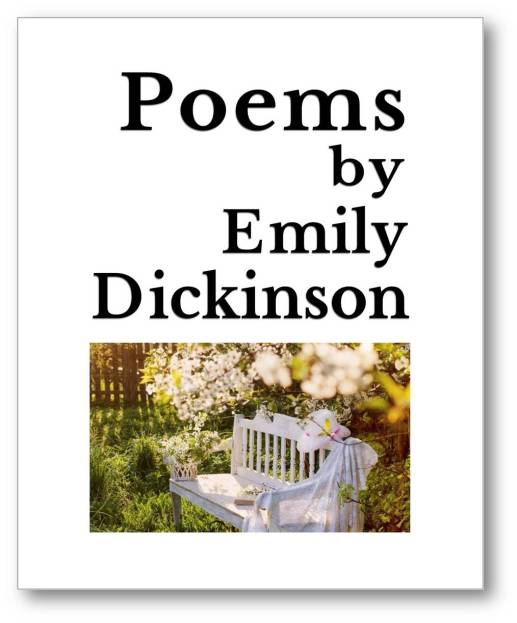
The world may never have seen her original handwriting, if her skill was taken for supernatural. Feel welcome to Poems by Emily Dickinson prepared for print by Teresa Pelka: thematic stanzas, notes on the Greek and Latin inspiration, the correlative with Webster 1828, and the Aristotelian motif, Things perpetual — these are not in time, but in eternity.
■Free access, Internet Archive
■E-pub | NOOK Book | Kindle
■Hard cover, Barnes & Noble | Lulu

Psycholinguistics
Linguistics
& Translation
Knowledge gains with good translation
■Public Domain
Translation. com
American English & Polish

Internet Archive,
the free text and image repository
■Feel welcome to use my free materials■
The posters are available to shop online as well.
 GRAMMAR WEBLOG BY TERESA EVA PELKA