
We have considered a hypothetical fruit, for our Modal phrases. Let us now think if we could arrive at the theory “net weight”: when we people make theories, it is usually to get something real.


Let us compare our real time and Modal frame: to guess if something could be good or bad, possible or uncanny, it is not always that we look to a clock, or depend on time of day.
45. I can see a theory fruit.

The fruit is theory, but in grammar as well as everyday life, human ability to see by standard does not refer to the PRESENT only, and language will give the thought an open frame: the Modal ability is not only for the PRESENT — I CAN see.
46. I see a theory fruit.
The time reference is singular, it is ON our cognitive ground for the grammatical PRESENT.

47. I have seen a theory fruit.
The time reference embraces a span from another mark in time TO the grammatical PRESENT. The real-time frame is open.

If we compare the real-time and Modal frames, the Modal may not tell between the real-time variables {TO} and {ON}.
Aspect Perfect
48. Maybe we HAVE learned something good. REAL-TIME VARIABLE {TO}
Aspect Simple
48a. Maybe we learned something good.
REAL-TIME VARIABLE {ON}
48b. We MAY HAVE / MIGHT HAVE learned something good.
MODAL FRAME CLOSED ON OBJECT OF THOUGHT

Modal phrases will keep the real-time value {IN}, and get closed as usual. Let us mind we made our real-time variable {AT} of merged variables {IN} & {TO}.
Aspect Progressive
49. Maybe we ARE learning something good. REAL-TIME VARIABLE {IN}
Aspect Perfect Progressive
49a. Maybe we HAVE BEEN learning something good. REAL-TIME VARIABLE {AT}
49b. We MAY HAVE / MIGHT HAVE been learning something good.
ADVERTISEMENT
Spring Flowing Colors


We could say the Modal frame does not keep the real-time spans of the variable (TO); it works balancing the variables {ON} and {IN}. Theory time is not the same as real time. The spans are not necessary.
We can call this our Modal net. We net (nullify as non-essential) the Perfect, our variable {TO}. Our syntactic HAVE works as a time anchor only.
Let us think about theory as compared with knowledge of what happens — in possible, ordinary talk.
50. You COULD HAVE been more careful with the handle.
50a. I was. Someone else MUST HAVE broken it off.
In examples 50 and 50a, auxiliary HAVE does not bring in any time span, as from one time to another. Let us compare,
50b. I HAVE been careful with this handle since the very first time I saw it.
A closed Modal frame happens to be interpreted for a suggestion that something did not happen.
51. We COULD HAVE gone for a walk yesterday, we had enough time, but Jim came in, and we stayed to study.
(We didn’t go.)
In fact, we people close the frame along with the think or talk time:
51a. We COULD HAVE gone for the walk, so we took the opportunity.
(The Modal frame is closed on the time we talked for consensus; we agreed and we went for the walk. we only do not talk about the talk, because it would be redundant.)
We mostly leave the frame open for ability.
51b. We had enough time yesterday, and we COULD go for a walk; it was lovely.
(Whether they went or not, would require further talk. The Modal itself does not tell.)
51c We had plenty of time yesterday, and we COULD go to the movies, we COULD go for a walk, or we COULD go see Jill. But Jim came in and brought those books we didn’t have so we stayed to study. Jill joined in.
(They didn’t go; we have the further talk and this is how we know.)
A generative grammar is not about looking to what has been already written or spoken in order to repeat after that. A generative grammar looks to how we can write and talk, comparing linguistic evidence, that is, language as spoken and written, and made available in corpora or other media.
Generative grammars are not all the same. Noam Chomsky’s is a parametric generative grammar. The grammar here is a cognitive variable generative set. A grammar is generative when it works for people to create speech and language on their own, rather than give rules and definitions to follow. Feel welcome to ■Universal & Generative, FAQ.
We may like to associate the time frame and the grammatical article: if we COULD go for a walk, or COULD HAVE gone for the walk, part three of the language journey has the grammatical article; there is Congress and the Congress in the Constitution.

Now and here, let us mind there is the Negative.
50c. It COULDN’T HAVE been anyone else near the handle, yesterday.
50d. I knew I COULDN’T repair it, and I left it alone.
Let us now think about Modality and main grammatical time. We need the Modal frames, because Modal form may remain the same in all real time.
52. We have enough time; we COULD go for a walk today.
52a. We are going to have the time; we COULD go for a walk tomorrow.
52b. We had the time yesterday, so we COULD go for a walk.
We know the grammatical time from context. We may learn more with Reported Speech, part four of the journey.
53. There is time enough; we could go for a walk, the PRESENT.
53a. There was time enough; we could go for a walk, the PAST.
Please mind, our devices are linguistic tools. We do not follow the term of the “language acquisition device” for human brains. Human heads have human language faculties.
Our auxiliary HAVE is always green, whether it brings an open or closed frame: we mark only auxiliary and head verbs — grammar anyway requires thinking, and it would not be a good idea to get dependent on crayons.
Let us get to a few more details on Modal structures:
■SUBCHAPTER 9.3. DETAIL ON MODAL STRUCTURES
■This text is also available in Polish.
ADVERTISEMENT
Book format in preparation.
In the first part of the language journey, feel welcome to consider a picture for
■ the grammatical Past, Present, and Future;
■ the Simple, Progressive, and Perfect;
■ infinitive, auxiliary, and head verb forms;
■ the Affirmative, Interrogative, Negative, and Negative Interrogative;
■ irregular verbs and vowel patterns: high and low, back and front.
Third edition, 2025.


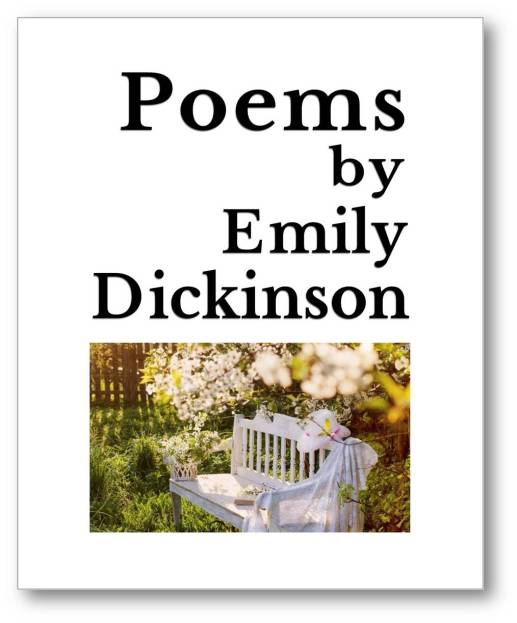
The world may never have seen her original handwriting, if her skill was taken for supernatural. Feel welcome to Poems by Emily Dickinson prepared for print by Teresa Pelka: thematic stanzas, notes on the Greek and Latin inspiration, the correlative with Webster 1828, and the Aristotelian motif, Things perpetual — these are not in time, but in eternity.
■Free access, Internet Archive
■E-pub | NOOK Book | Kindle
■Hard cover, Barnes & Noble | Lulu

Psycholinguistics
Linguistics
& Translation
Knowledge gains with good translation
■Public Domain
Translation. com
American English & Polish

Internet Archive,
the free text and image repository
■Feel welcome to use my free materials■
The posters are available to shop online as well.
 GRAMMAR WEBLOG BY TERESA EVA PELKA