
Different languages have different ways to name objects of thought. We can say a dog in English; in German ein Hund, in French un chien, in Greek σκυλος, and in Russian собака.
All these words have different forms, but they will refer in context to the same object of thought that we name a dog in English.
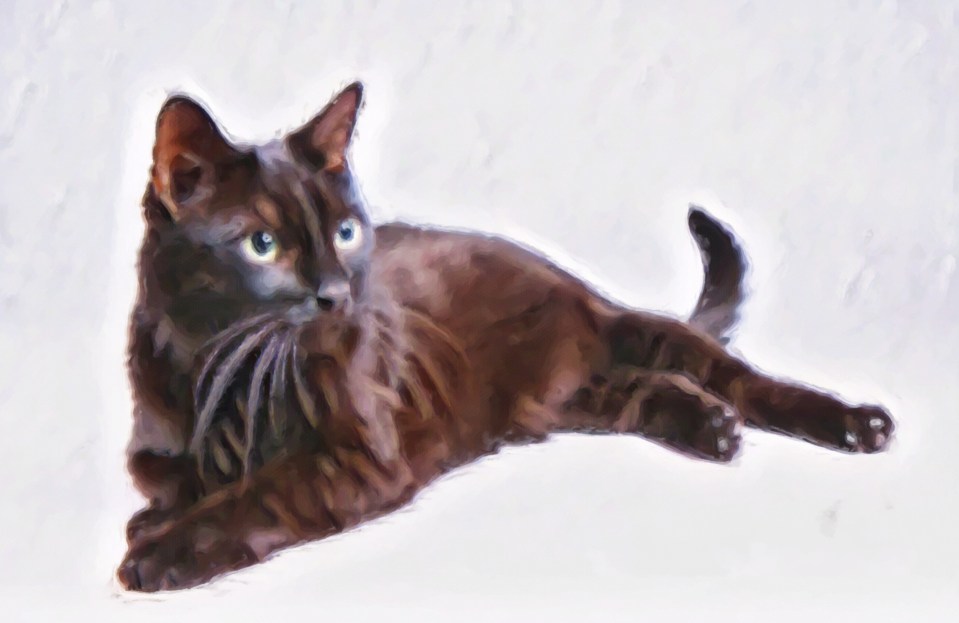
A cat in English will be eine Katze in German, or un chat in French, γάτα or γάτος in Greek, or кот in Russian.
In English, a chat can be a conversation, a gat may mean a channel or passage. Kot might be a Yeniseian language.
Language forms happen to differ, but they also happen to be very similar. We always need to know the language and the context, to see what a word denotes: in all languages and and the same time, a picture of a cat is not a cat, and the same is true about dogs.

Language form is word form. Psycholinguistics has “body language” for a figure of speech. There is no language without syntax, and our bodies are not word order. Sign languages are a different matter.
All languages can express time and person. Only their language forms to do this may vary.
To work on language form, we can use virtual words. Invented or virtual words have word shapes, but they have no meaning. They can help exercise syntax. Children invent words spontaneously to play, and also to practice language.
We can have two invented verbs, bimmo and theemo. They can show places for head verbs. Bimmo can be as a regular verb; theemo can behave like an irregular verb.
Past Simple
Present Perfect
I bimmoed.
I theemoed.
I have bimmoed.
I have theemoen.
We can have two invented nouns, phimmo and rheemo.
Our virtual verbs are gillyflower. Our invented nouns can be carrot. The colors occur less in print, and invented words are just to help exercise. They are not to replace language.
Try our ■COLOR CODE for real words.

Colors can help learn, read and write
The Travel begins with verbs, as in natural acquisition and learning. Verb auxiliary roles are marked in green, and head roles are mauve. Pronouns and nouns are ink blue. Highlights are forget-me-not, blue. We avoid color red, as it usually brings prescriptive opinion on language. ■More

Virtual words can help learn speech sounds. Our virtual words have the sounds {f}, {b}, {th}, and {r} in the same word position. The sounds happen to be difficult to learners, just as telling [I] from [I:]. We have these in “phimmo” and “rheemo”.
Kids might say things as “phimmo bimmoes rheemo”, not only for fun, but also for real language practice. Virtual words allow exercise on linguistic form solely. This means we can work as in school, only easier.

As in our ■MIND PRACTICE, let us think about exercise 24, use ■GRAMMAR VISUALS and have fun (!)
1. Phimmo will bimmo rheemo. 2. Rheemo has theemoen phimmo. 3. Rheemo theemoed phimmo. 4. Phimmo is theemoing rheemo. 5. Rheemo will be bimmoing phimmo. 6. Phimmo will have theemoen rheemo. 7. Phimmo had theemoen rheemo. 8. Rheemo was bimmoing phimmo.

1.2. Mind practice: thinking on purpose
Silent thought is a great friend of language skill. We do not know a language really, if it does not belong with that inner competence. It is with practice that the brain together with mind makes associations for work on language trace features solely. ■More

5.2. Practice: symbolic cues and real syntax
We exercise the target grammatical time with symbolic cues, gather language patterns from pieces, and then figure on pieces from symbolic cues. All along, we form the answers in our minds solely: this is where thinking habits take shape, for learning to hold. ■More
In Part 2 of the grammar travel, we have language form relativity: theory making is similar in Polish, Russian, French, and other languages:
if I was, si j’étais, gdybym był/a, если бы я был/а, wäre ich, etc.
Our relativity has nothing to do with Whorfianism, that is, a theory on superiority of some languages over others.
The theory in our grammar travel is that languages have taken on varied directions, since people began evolving them in those earliest of times, regarding the language form. English would have 4 Aspects and no inflection; Russian would have inflection and no Aspects, but in word sense, that is, semantic fields, both languages have all the necessary variables. This is how translation is possible.
We could say in English, I am reading, and in Russian, Я читаю.
We could say in English, I read, and in Russian the verb form would remain the same, Я читаю, but the context would let tell between senses as for the Simple or Progressive. Otherwise, the speaker would add an adverbial, сейчас, now, or обычно много, generally much.
On the other hand, it is inflection in Russian, to tell if the cat ate the fish, or it was the fish that ate the cat. English needs the syntactic context.
The fish ate the tabby cat. Рыба (ryba) съела полосатого кота (kota).
The tabby cat, the fish ate it. Полосатого кота (kota) съела рыба (ryba).
The tabby cat ate the fish. Полосатый кот (kot) съел рыбу (rybu).
Human capabilities do not become altered with either of the languages, and there are people who can speak both, only not exactly at the same time.

We can use virtual words with most exercises — if and as we like.
■10.3. WORKOUR FOR REAL-TIME TALK: LEARN TO SAY THEEMO
■This text is also available in Polish.
ADVERTISEMENT

The world may never have seen her original handwriting, if her skill was taken for supernatural. Feel welcome to Poems by Emily Dickinson prepared for print by Teresa Pelka: thematic stanzas, notes on the Greek and Latin inspiration, the correlative with Webster 1828, and the Aristotelian motif, Things perpetual — these are not in time, but in eternity.
■Free access, Internet Archive
■E-pub | NOOK Book | Kindle
■Hard cover, Barnes & Noble | Lulu

Psycholinguistics
Linguistics
& Translation
Knowledge gains with good translation
■Public Domain
Translation. com
American English & Polish

Internet Archive,
the free text and image repository
■Feel welcome to use my free materials■
The posters are available to shop online as well.
 GRAMMAR WEBLOG BY TERESA EVA PELKA