
Human thought and language originate in own mind: most exercises in this grammar course are to be done by thinking solely, to encourage mind habits.
Exercise 4. It is much easier to make progress in language, if we learn to introspect and give direction to own intellect. We may begin with exercising awareness of own mind generally.
A. Let us think how long we could stay without thinking. We may have happened to hear or even say that someone is not thinking. This is yet only a saying, something nobody can mean literally. In reality, no living person could stop his or her mind.

B. Let us fix our visual focus on a single thing — a teacup, a pencil, fruit? Let us try to think about our object only and not anything else. We may use
a theory strawberry and a wristwatch, to see how long we cope.
C. Let us close our eyes and try not to think absolutely anything. The watch will tell us if we really can do this.
D. Let us think if there is language in our thought, what language it is (as English, German, French, or another), and how we think. Do we think in entire words? Could our thoughts be only pictures?
E. Let us go back to ■EXERCISES 1-3. We try to “see” and “say” our answers in our thoughts strictly. If we want to, we audibly say or whisper the answers after. We can put the answers on a spare piece of paper, at the very same time as we whisper or speak.
ADVERTISEMENT
Spring Flowing Colors


In the beginning, we might feel it is really an effort to “discipline” ourselves and consciously direct own thinking. It is essential that we try. “Saying” or “writing” in our thoughts before spoken or written activity is more than likely to make our language habits stronger.
The practice may resemble children learning first tongues, especially if we whisper or speak, and write at the same time. Importantly, we do not have to stay doing this forever. It is only to exercise.
We people naturally have inner language. For example, silent reading is faster than reading audibly. This is the inner language to facilitate the process. It is not entire words or even speech sounds. It has only trace features of written or spoken language.
Inner language is the highly advanced way that human brains and minds correlate language knowledge and skill. We do not know a language really, if it does not belong with our inner competence. Shaping entire words and phrases in thought is the start. With practice, the mind is going to make associations that work on language trace features solely. Silent thought is a great friend of language skill.
Feel welcome to further grammar journey.
■This text is also available in Polish.

Chapter 2. The future needs the present
We can predict the future only to an extent, because it all the time takes on form or becomes — in our Present, — and there is always more than one factor to human reality. We can use Present grammatical forms in English to talk about the future, and “will” is one…


Chapter 3. Time is like a river: verb patterns
Everyday language has phrases as a flow of time, a course of events: we people happen to have such impressions about life. Grammatical patterns for words and time may look a lot to think about at first, and this is why we begin with a good glimpse. ■More
ADVERTISEMENT
Book format in preparation.
In the first part of the language journey, feel welcome to consider a picture for
■ the grammatical Past, Present, and Future;
■ the Simple, Progressive, and Perfect;
■ infinitive, auxiliary, and head verb forms;
■ the Affirmative, Interrogative, Negative, and Negative Interrogative;
■ irregular verbs and vowel patterns: high and low, back and front.
Third edition, 2025.


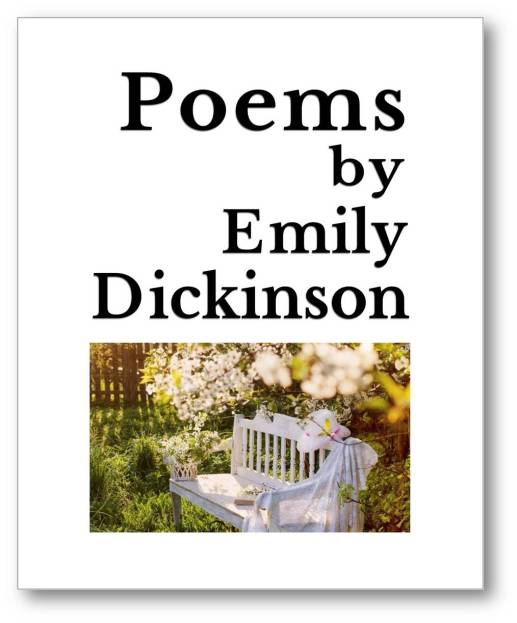
The world may never have seen her original handwriting, if her skill was taken for supernatural. Feel welcome to Poems by Emily Dickinson prepared for print by Teresa Pelka: thematic stanzas, notes on the Greek and Latin inspiration, the correlative with Webster 1828, and the Aristotelian motif, Things perpetual — these are not in time, but in eternity.
■Free access, Internet Archive
■E-pub | NOOK Book | Kindle
■Hard cover, Barnes & Noble | Lulu
Internet Archive,
the free text and image repository
■Feel welcome to use my free materials■
The posters are available to shop online as well.
 GRAMMAR WEBLOG BY TERESA EVA PELKA