
Why think about travel in grammar? Let us reason on our language work until this place in the grammar course. We can use the Present Perfect: we reason how we have worked, just as we could reckon how we have traveled.

Here, in subchapter 4.1, we could say we have connected the grammatical time and aspect, or, in words possibly more usual, that we have learned to use the fields of time with variables. Our grammatical time is the PRESENT, the same as our real time, inclusive of all chapter 4 so far.
The Perfect Aspect is not the only way to look back on time. We can say we made our passage with the pods of time and traversed the river of time. We reckoned to be as on a map, we imagined ourselves as in an area, and we compared the Perfect Aspect to a way to a place.
By standard, we can talk the same about places we visited during a trip or journey. We use the Past Simple: our forms are “made”, “traversed”, “reasoned”, “were”, “imagined”, and “compared”.
It is when we want to highlight an activity or faculty with regard to the PRESENT that we use the Present Perfect. Otherwise, we can just stay {ON} our cognitive maps.
In chapter 5, we might say we connected the grammatical time and aspect, or that we learned to use the fields. Chapter 4 may belong with the grammatical PAST: we were on it last week, another past time, or it is cognitively PAST to us.
If we want to sum up on Part 1 entire, we have quite some choice on the angle of view. For the language matter in chapter 4, we might say we connected, we have connected, as well as that we connect the Time and Aspect, or that we used, we have used, as well as that we use the fields with variables. The regard will depend on how relevant we think the matter is to our real-time PRESENT.
If someone is curious or wants to join the course, we might say — about the same language matter — we will have connected the grammatical time and aspect by chapter 5.
This is why the grammar course is a “travel in grammar”: we can speak about the same language matter with various forms of grammar, whereas the matter does not go change places in the course book or anywhere at all, and we flexibly express own regards.
We may picture this grammar journey thinking if we go “uphill”, or things become easier as we get to know more with chapters.


Human logic is flexible by nature, and language altogether is not a predetermined reality. Beginning to read a book or to watch a movie, we may wonder what there is going to be; somewhere around the middle, we may look back to what has happened, and at the end we may think about things accomplished. All along, our thought has grammar; it is the same grammar we have for everyday living.
ADVERTISEMENT
Spring Flowing Colors


Language does not require extraordinary talents. Our motto may be Bruce Derwing here, no other, special mechanisms or secret abilities are necessary for learning language than learning anything else; that is, standard intellect is talent enough. More, language workout can be pleasure, if we know that simply practice lets us learn choosing easily, between the Simple, Progressive, and Perfect as cognitive variables in real time. It can be good time and no stress.

It is important that we learn to determine our ground in language independently. Language may influence thinking, but there cannot be grammar or other rule good enough to regulate human thought. For our way with the Aspect to meet our thought in real time, we may need a few exercises.
■4.2. EXERCISES: LANGUAGE MAPPING PRACTICE.
■This text is also available in Polish.
ADVERTISEMENT
Book format in preparation.
In the first part of the language journey, feel welcome to consider a picture for
■ the grammatical Past, Present, and Future;
■ the Simple, Progressive, and Perfect;
■ infinitive, auxiliary, and head verb forms;
■ the Affirmative, Interrogative, Negative, and Negative Interrogative;
■ irregular verbs and vowel patterns: high and low, back and front.
Third edition, 2025.


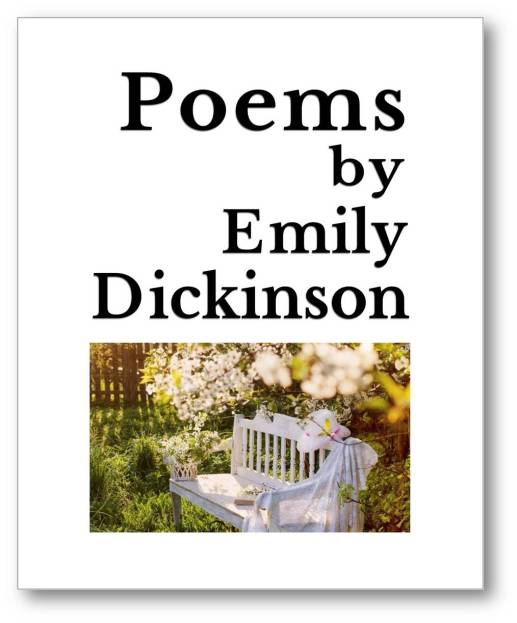
The world may never have seen her original handwriting, if her skill was taken for supernatural. Feel welcome to Poems by Emily Dickinson prepared for print by Teresa Pelka: thematic stanzas, notes on the Greek and Latin inspiration, the correlative with Webster 1828, and the Aristotelian motif, Things perpetual — these are not in time, but in eternity.
■Free access, Internet Archive
■E-pub | NOOK Book | Kindle
■Hard cover, Barnes & Noble | Lulu
Internet Archive,
the free text and image repository
■Feel welcome to use my free materials■
The posters are available to shop online as well.

Psycholinguistics
Linguistics
& Translation
Knowledge gains with good translation
■Public Domain
Translation. com
American English & Polish

 GRAMMAR WEBLOG BY TERESA EVA PELKA