
“Future in the Past” or “Unreal Past”? The Simple against the Perfect, and the Simple versus the Progressive, we make out a time frame. Devices as the Modal Net and Form Relativity may render the Conditional or Sequence of tenses redundant, for “unreal” grammar to work in real time.
Website under refurbishment.

Chapter 6. To choose own path in time
There are no universal principles to design between the Present Perfect and the Past Simple. We may learn many grammar rules, and yet we are always going to need own resolves in real-time contexts. An idea as a cognitive time frame can prove very helpful and real-time efficient. ■More


6.1. Our linguistic gravitation
Time extents, Present or Past, do not depend on the Aspect, Simple or Perfect. To express own thought well, we need the cognitive ground and time frame. The matter can be easy as with gravitation: when we have the ground, we close the frame. ■More

6.2. Aspect variable and time frame
Madame Règle is not a systematic person at all. Her choice on scarves sure depends on some totally unpredictable factor, just as the exact time for lunch, for which you might want to assume the broad time frame of about sixty minutes to commence or not to happen altogether. ■More

6.3. Exercises: the Aspect and the frame
1. The motmot had completely befallen for a piece of fresh stollen. 2. The skylark found nothing to outbid the bit of cosmos with a squid. 5. The golden frog behind the chilidog overslept and wept. 8. The spotted redshank bachelorette bewailed, and reset her buret for the bouncing bet. ■More

6.4. More practice: the frame, variable, and form
2. The hedgehog hid the apples from the bird in a good jar with a lid. 3. The rabbit strew the cashews for the jabiru, and went on making his debut callaloo. 8. The mountain cat usually sat on his mat, to chat with the standpat spat — on habits and repast. ■More

6.5. Grammatical target time and frame
His parents gave up on kindergarten. When Ms. Duncan suggested playing the musical chairs, Art threw in three left hand gloves. One of them belonged to Ms. Duncan. Despite the early predilection for challenge, he chose himself a chairborne job. The chair allowed one person exactly. ■More

Chapter 7. Time in the mind and heart
Some 200 years ago, there were no words or phrases as spatialization or a cognitive variable, but there were language uses as here: The advice nearest to my heart and deepest in my convictions is that the Union of the States be cherished and perpetuated — President James Madison. ■More

7.1. Practce for the heart and mind
“You seem to be this most daily of creatures”, said the butterfly. The dayfly agreed. “Nothing that has become can be truly eternal anyway, as it had a beginning”, it said. “The forever more is what anybody cares”, the butterfly remarked. “I sure also have become.” ■More

Chapter 8. A Progressive and Perfect regard
When the reference for time is singular, the cognitive time frame is closed, and the variable can be {ON} or {IN}. All Perfect tenses make a dual time reference and their time frame is open. The cognitive variables are {TO} or {AT}, to highlight a time span or dynamism. ■More

8.1. Earthling basic cognitive variable
In thousands of years, people to think what there is {ON} a map, have not denied plausibility for places {IN} areas, routes {TO} places, as well as locations {AT} them. Early childhood learning to walk has gotten along with learning to talk. The pragmatics cannot break a reasonable rule. ■More

8.2. Practice for all grammatical Aspects
3. The bumblebee had wished for the whole meal opportunity since Friday last. 4. The katydid wanted a new aureate bib, to match his figured bib of old. 7. The butterfly kissed the bee in the midst of her phiz, when he saw the golden grit. 9. Glow worms respected in varicolor, flexing… ■More

Appendix 2. Irregular verbs, high & low vowels
Most dictionaries list irregular verbs alphabetically, so we do not need to repeat that here. We look to speech sound patterns: they make remembering irregular forms much easier. We may begin with just reading a few verbs at a time. The free PDF has the story entire. ■More
■Content also available in Polish■

Chapter 9. To tell the fashion in valuable time
Modal verbs do not narrate the real time. Their manner is relative to real time, as they mediate between the grammatical Time and Aspect. Their Past forms may tell the probability is lower today, the same as that it was lower yesterday. We develop Modal cognitive frames. ■More

9.1. Auxiliary HAVE and Modal syntax
Let us now say there shows a theory fruit that has a stalk. Our Modal frame can be open. We might say, the use for the stalk is an open matter, and altogether, when we know it is, we can make some more of a reasonable theory. Not even theoretical physics would go on without data. ■More

9.2. Theory time and the Modal Net
Real-time cognitive frames close on time extents. Modal frames close on objects of thought. It must be that theory time is not the same as real time to human minds, and Modal frames will keep the value {IN}, but they will not mark values {TO} or {AT}, those for a span of time. ■More

9.3. Detail on Modal structures
The natural economy and efficiency of human minds for language continues to show with Modal expression. Ancillary time can be only hypothetical in questions, and it would be theory twice, with Modal Contingency. The language standard avoids forms as “Mustn’t you have…” ■More

9.4. Modal Relativity practice
The westerly wind could perceive something indivisible and intermediate about time. Well, there always would be a present moment to be the only present. This only present wouldn’t be anywhere else but where we are ourselves, and we always say “here”, for such a place.. ■More

Chapter 10. Form relativity galore
If we guess or suppose, Past forms refer to the Present, and Present forms refer to the Future. It is only the anchored Past to remain in the grammatical Past. The matter is similar in many languages: if I was, si j’étais, gdybym był/a, если бы я был/а, wäre ich. ■More
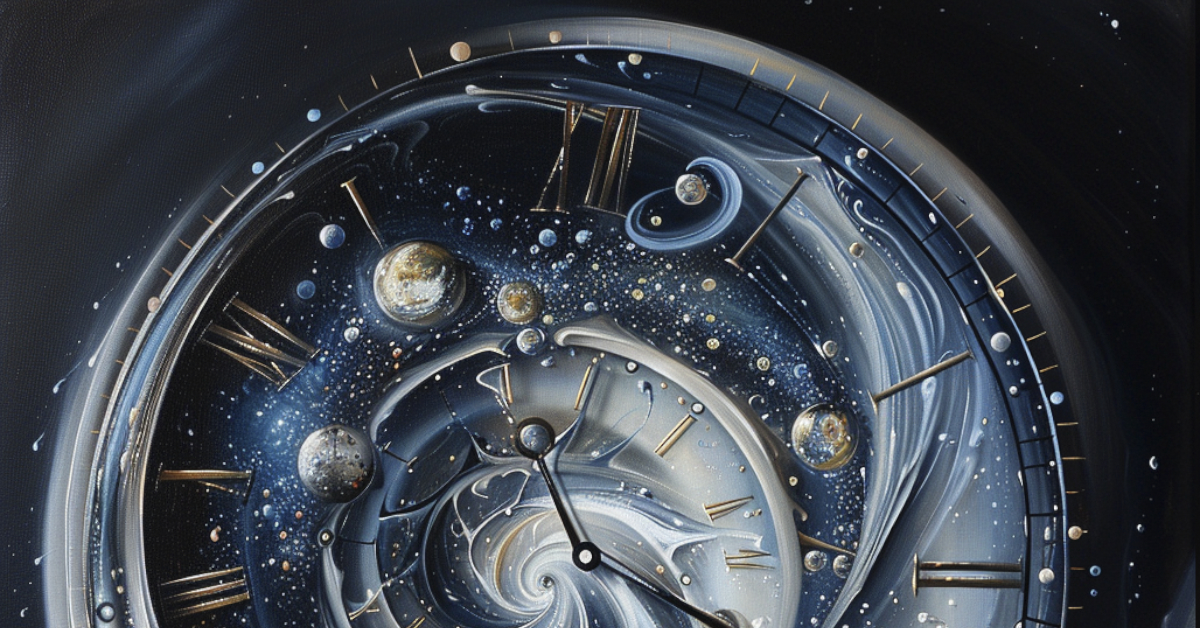
10.1. Grammar Unreal or Real time
No group and no Government can properly prescribe precisely what should constitute the body of knowledge with which true education is concerned. — Franklin Delano Roosevelt | If I had permitted my failures, or what seemed to me at the time a lack of success… ― Calvin Coolidge ■More

10.2. The relative Progressive
Our cognitive variables and frames for grammatical time may complement one another: Modal verbs close their frames with auxiliary HAVE, whereas real-time frames open with the same auxiliary. We remember, cognitive variables and frames are not parameters. ■More

10.3. Form Relativity practice
The grain of sand did one hour of thinking about composite things a day, and appreciated the activity as emotionally valid. As the 60 minutes were not immaterial, the faculty the grain of sand employed during the time couldn’t be immaterial either, it concluded. ■More

Appendix 4. Patterns for all Aspects
When we learn, it is good to browse through language forms time and again, only read a few, and think about them with other patterns that come to mind. The presentation here has all the 4 Aspects in the Affirmative, Interrogative, Negative, and Negative Interrogative. ■More


Grammar bonus
A color code to help read and learn, and simple questions answered: what a verb is, what language form is; irregular verbs, vowels high and low, back and front; patterns for all Aspects, the Simple, Progressive, Perfect, and Perfect Progressive. ■More
Let us not forget about the early, curious years.
Grapevine: Heebeecheeche and other capers
I don’t know about anyone to have visited everywhere in person, so I thought there could be folks into our game. ■More

Grapevine: Vaulters and mergers
If you don’t make it with a new word and stumble, you act as in a cloud of well familiar bubbles. You do not look around in amazement: you know they are there. ■More
■Click for Part 1
ADVERTISEMENT

The world may never have seen her original handwriting, if her skill was taken for supernatural. Feel welcome to Poems by Emily Dickinson prepared for print by Teresa Pelka: thematic stanzas, notes on the Greek and Latin inspiration, the correlative with Webster 1828, and the Aristotelian motif, Things perpetual — these are not in time, but in eternity.
■Free access, Internet Archive
■E-pub | NOOK Book | Kindle
■Hard cover, Barnes & Noble | Lulu

Psycholinguistics
Linguistics
& Translation
Knowledge gains with good translation
■Public Domain
Translation. com
American English & Polish

Internet Archive,
the free text and image repository
■Feel welcome to use my free materials■
The posters are available to shop online as well.
 GRAMMAR WEBLOG BY TERESA EVA PELKA